

Covington Landscape Services
Sign up now for summer service and enjoy a lush, beautiful yard all season long!
Get a Free QuoteLandscape Services Tailored for Covington, Georgia
Expert Lawn Care for Covington’s Unique Environment
Covington’s residential landscapes face a blend of challenges shaped by the city’s humid subtropical climate and distinctive geography. Homeowners in neighborhoods like Clark’s Grove and Lochridge Estates often contend with summer drought stress, which can leave lawns parched and patchy without attentive irrigation and drought-resistant turf choices. Mature trees in historic districts and near Turner Lake Park create shaded lots, requiring specialized care to maintain healthy grass and prevent moss or bare spots.
Winter months bring another set of concerns, as salt exposure from road treatments can impact curbside lawns along main routes like Floyd Street. Sloped properties near the Yellow River or in the Covington Place area are prone to soil erosion, demanding tailored solutions such as strategic planting and mulching. For more information about Covington’s parks, neighborhoods, and community resources, visit the official City of Covington website.
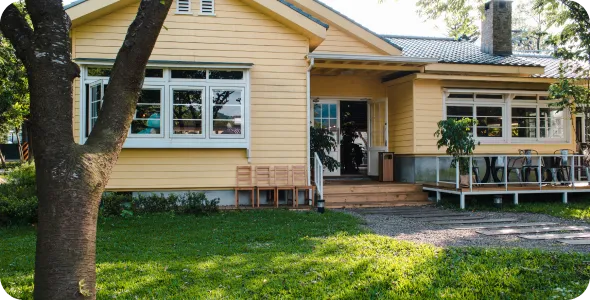
Our Covington Landscaping & Yard Care Services
Covington Gardening Services
Covington Yard Clean Up
Why Choose Covington Landscape Services
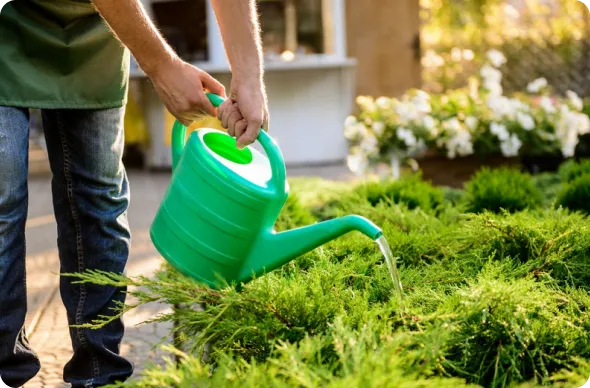

Covington Homeowners Trust Us
-
Expert Lawn Maintenance
-
Reliable Scheduling
-
Competitive Pricing
-
Professional Team
-
Satisfaction Guarantee
-
Personalized Service
Contact Your Local Covington Public Works or Solid Waste Department for Green Waste Info
Covington residents in Newton County can coordinate yard waste disposal through the city's public works programs. Grass clippings, leaves, branches, hedge trimmings, and organic debris are typically collected on a scheduled basis; branches should be cut to manageable lengths and bundled, while loose leaves and clippings should be placed in approved containers rather than plastic bags. The city's convenience center accepts yard waste from verified residents, and commercial landscapers may be subject to separate disposal fees and facility requirements. Storm debris collection is activated after significant weather events. Critically, blowing or dumping clippings, leaves, sediment, or fertilizer granules into streets, gutters, storm drains, or streams is prohibited under local stormwater rules and the Clean Water Act. Grasscycling—leaving clippings on the lawn—reduces waste volume and returns nutrients to Piedmont clay soils.
Covington Public Works Department
2116 Stallings Street NW, Covington, GA 30014
Phone: (770) 385-2000
Official Website: Covington Public Works Department
Lawn Care Regulations & Permits in Covington, GA
All commercial pesticide applicators working in Covington must hold valid Georgia Department of Agriculture licenses under the Georgia Pesticide Use and Application Act of 1976 and the Georgia Pesticide Control Act of 1976. Verify any applicator through the Georgia Department of Agriculture - Search for Pesticide Applicators. Fertilizer products are regulated at the state level under the Georgia Fertilizer Act of 1997, though Covington's stormwater ordinances influence application timing and runoff prevention near creeks and detention ponds. Outdoor watering must follow statewide Georgia Water Conservation rules, including odd/even-day schedules and early-morning or late-evening irrigation windows. Covington's noise ordinances restrict loud equipment operation during early morning and late evening hours in residential areas. Commercial lawn care operators must maintain a valid occupation tax certificate with the city, carry liability insurance, and comply with vehicle and trailer regulations.
Georgia Department of Agriculture
19 Martin Luther King Jr. Drive SW, Atlanta, GA 30334
Phone: (404) 656-3600
Official Website: Georgia Department of Agriculture
Covington Development Services
2194 Emory Street NW, Covington, GA 30014
Phone: (770) 385-2178
Official Website: Covington Development Services
What Neighborhoods Do We Serve in Covington, GA?
Covington sits squarely in the Metro Atlanta / Piedmont region of Georgia, and its neighborhoods reflect classic Piedmont red-clay soils, mature hardwood canopy, and subdivision-era development patterns. Each area presents distinct lawn care challenges:
- Covington Historic District (Downtown) — Older lots with compacted clay, mature oaks and pecans creating heavy shade, and tall fescue or zoysiagrass lawns. Historic preservation standards influence landscape aesthetics, and proximity to Town Creek demands careful stormwater management.
- Oxford / Emory Street Corridor — Established residential properties with clay-loam soils, significant tree-root competition, and mixed bermudagrass-fescue lawns requiring shade-sun transition strategies.
- Eastside / Highway 278 Corridor — Newer subdivisions with builder-grade fill soil over native red clay, compaction issues, full-sun bermudagrass, and HOA appearance standards governing mowing height and weed control.
- Covington Town Center / Alcovy Road Area — Mixed-age developments near Alcovy River tributaries with stream-buffer restrictions, erosion-prone slopes, and stormwater pond maintenance requirements.
- West Covington / Brown Bridge Road — Suburban lots with moderate canopy, clay compaction, and zoysiagrass performing well in mixed-light conditions; proximity to detention infrastructure requires runoff-conscious fertilization.
- North Covington / Access Road / I-20 Corridor — Commercial-adjacent residential areas with disturbed soils, compacted subgrade, and bermudagrass lawns needing regular aeration and soil amendment.
- South Covington / Flat Shoals Road — Larger rural-edge lots with heavier clay, seasonal drainage issues in low spots, and mixed warm-season turf benefiting from core aeration and compost topdressing.
Partnering With Covington's Stormwater, Environmental, or Sustainability Office
Covington's stormwater management program operates under Georgia's MS4 permit requirements, aligning with Georgia EPD - Municipal Stormwater and Georgia EPD - Stormwater regulations. The city's infrastructure drains into the Alcovy River and Yellow River watersheds within the larger Ocmulgee River basin, making nutrient and sediment control essential. Sustainable lawn care practices that support these goals include:
- Proper mulching around beds and trees to reduce bare-soil erosion
- Grasscycling to return nitrogen to clay soils naturally
- Compost topdressing to improve infiltration in compacted Piedmont clay
- Rain garden installation to capture runoff from impervious surfaces
- Native plant integration along stream buffers and drainage corridors
- Avoiding fertilizer application before forecasted heavy rain
Coordination with the Georgia Soil and Water Conservation Commission - Urban Erosion & Sediment Control ensures that any grading or landscape renovation follows erosion-control best practices.
Georgia Environmental Protection Division
2 Martin Luther King Jr. Drive SE, Suite 1456 East, Atlanta, GA 30334
Phone: (404) 656-4713
Official Website: Georgia Environmental Protection Division
Newton County Cooperative Extension (UGA)
1113 Usher Street NW, Suite 202, Covington, GA 30014
Phone: (770) 784-2010
Official Website: UGA Cooperative Extension - Newton County
Top Covington Lawn Problems (and How We Solve Them)
Covington's Piedmont clay soils, humid summers, and mature tree canopy create a specific set of turf challenges:
- Clay compaction and poor infiltration — Heavy foot traffic and red-clay subsoils restrict root growth and water penetration. Core aeration in fall for fescue or late spring for bermudagrass, combined with compost topdressing, restores soil structure. Guidance from UGA Lawn Care & Landscaping supports annual aeration programs.
- Brown patch in tall fescue — High humidity and warm nighttime temperatures in summer trigger Rhizoctonia outbreaks. Reduce nitrogen in late spring, water early in the morning, and mow at 3.5–4 inches to improve air circulation.
- Spring dead spot in bermudagrass — Circular dead patches appear as bermuda exits winter dormancy. Improve drainage, reduce fall nitrogen, and core-aerate to break up thatch per UGA Turfgrass recommendations.
- Shade thinning under mature hardwoods — Dense canopy from oaks and hickories starves turf of sunlight. Transition to shade-tolerant zoysiagrass cultivars or fine fescue blends, raise mowing height, and selectively prune lower limbs.
- Erosion and runoff on slopes — Piedmont clay sheds water rapidly during thunderstorms. Terracing, erosion-control blankets, and deep-rooted ground covers stabilize grades near creeks and stormwater infrastructure.
- Armyworm and sod webworm damage — Late-summer caterpillar infestations can strip bermudagrass overnight. Scout regularly, apply targeted Bt-based treatments when larvae are small, and follow integrated pest management principles.
- Weed invasion in compacted soils — Crabgrass, dallisgrass, and sedges exploit thin, stressed turf on compacted clay. Soil testing through UGA's lab, proper pH correction with lime, and pre-emergent timing reduce weed pressure without excess chemical input.
What Makes Lawns in Covington Different From the Rest of Georgia?
Covington occupies USDA Hardiness Zone 8a in the eastern Piedmont, roughly 40 miles southeast of Atlanta. Its lawn care reality differs markedly from other Georgia regions:
- Soil — Piedmont red clay and Cecil clay-loam dominate, unlike the sandy Coastal Plain soils of South Georgia or the rocky shallow soils of North Georgia's foothills. Clay holds moisture but resists infiltration, demanding aeration-focused management.
- Turf mix — Bermudagrass thrives in full sun, zoysiagrass handles mixed-light suburban lots, and tall fescue persists in shaded areas but suffers summer decline—a transition-zone challenge absent in warmer South Georgia where centipedegrass and St. Augustinegrass dominate.
- Growing season — Approximately 220–230 frost-free days, shorter than coastal Savannah but longer than Dahlonega or Blue Ridge, creating a compressed window for cool-season overseeding and a long warm-season growth period.
- Rainfall and drought — Covington averages 50+ inches of rain annually, but Piedmont clay creates paradoxical drought stress as water runs off rather than infiltrating, unlike sandy South Georgia soils where water drains too quickly.
- Pest pressure — Brown patch and spring dead spot are primary disease concerns, driven by humidity and clay-moisture dynamics rather than the nematode and chinch bug pressures common in coastal and southern zones.
- Landscape character — Mature hardwood canopy, HOA-governed subdivisions, and creek-corridor sensitivity define Covington's landscape, contrasting with the open agricultural edges of Middle Georgia or the salt-influenced marshfront lots of Coastal Georgia.
Supporting Local Events in Covington With Lawn Expertise
Covington's vibrant community calendar and film-industry presence create unique demands for well-maintained public and private landscapes. Lawn care coordination supports:
- Preparation and recovery of athletic fields at Legion Field and local school campuses for sports seasons and tournaments
- Downtown Square beautification for festivals, farmers markets, and the city's frequent film productions
- Park maintenance support at Baker Field, Cricket Frog Trail corridors, and neighborhood pocket parks
- School grounds care for Newton County School System campuses during events and graduation seasons
- Neighborhood association cleanups and HOA common-area seasonal preparation
- Storm recovery assistance after severe Piedmont thunderstorms, including fallen limb removal, turf repair, and erosion stabilization along creek corridors
Covington Parks & Recreation Department
2194 Emory Street NW, Covington, GA 30014
Phone: (770) 385-2010
Official Website: Covington Parks & Recreation Department
Eco-Friendly Landscaping Backed by Covington's Water-Saving and Green Initiatives
Aligning with Covington's watershed protection goals and statewide Georgia Water Conservation guidelines, environmentally responsible lawn care in the Piedmont region prioritizes:
- Smart irrigation — Wi-Fi-enabled controllers with rain sensors, watering only during permitted early-morning hours, and zone calibration to prevent runoff on clay slopes
- Drought-tolerant turf selection — Bermudagrass and zoysiagrass cultivars that require less supplemental irrigation than tall fescue during July and August heat
- Reduced-chemical approaches — Compost topdressing to build organic matter in clay, integrated pest management to minimize pesticide use, and soil-test-based fertilization to prevent nutrient overload
- Pollinator and native plant integration — Establishing native perennial beds and reducing mowed turf in low-use areas to support pollinators and reduce inputs
- Lower-emission equipment — Battery-powered mowers, trimmers, and blowers to reduce noise and exhaust in residential neighborhoods
- Carbon sequestration — Supporting Covington's urban tree canopy through proper root-zone care, mulching, and avoiding soil compaction around mature trees
Covington Water Department
2124 Church Street NE, Covington, GA 30014
Phone: (770) 385-2050
Official Website: Covington Water Department
National Weather Service - Peachtree City Office
4 Weather Service Road, Peachtree City, GA 30269
Phone: (770) 486-1133
Official Website: National Weather Service Offices
U.S. Environmental Protection Agency, Region 4
61 Forsyth Street SW, Atlanta, GA 30303
Phone: (404) 562-9900
Official Website: U.S. EPA Region 4
Proudly Serving These Streets and Areas in Covington
Our service coverage spans Covington's diverse residential landscape, organized by geographic area:
Downtown / Central Covington:
- Covington Square and surrounding historic streets
- Monticello Street, Floyd Street, Conyers Street, Church Street
- Emory Street corridor and College Avenue
North Covington:
- Access Road, Industrial Boulevard, and neighborhoods near I-20
- Residential areas along Highway 142 and Pace Street
- Subdivisions near Newton County Library and Turner Lake Park
East Covington:
- Highway 278 / Washington Street corridor
- Eastwood, Settlers Grove, and newer subdivisions east of town
- Properties near Alcovy River tributaries and associated stream buffers
South Covington:
- Flat Shoals Road, Geiger Street, and Brown Bridge Road areas
- Established neighborhoods near Legion Field and Baker Field
- Rural-edge properties with larger lots and heavier clay soils
West Covington:
- Brown Bridge Road, Crowell Road, and Salem Road corridors
- Oxford Road and neighborhoods adjacent to Oxford College of Emory University
- Cricket Frog Trail greenway-adjacent properties
Notable Landmarks and Special Consideration Areas:
- Covington Town Square (film-production and historic-district standards)
- Turner Lake Park, Legion Field, and city greenway corridors
- Newton County School System campuses
- HOA-managed subdivisions with specific landscape covenants
- Properties within stream buffers along Town Creek, Dried Indian Creek, and Alcovy River tributaries requiring stormwater-sensitive maintenance practices
Georgia Soil and Water Conservation Commission
4310 Lexington Road, Athens, GA 30605
Phone: (706) 552-4470
Official Website: Georgia Soil and Water Conservation Commission